ENGINEERED AROUND YOUR PROCESS
Retrofits & Modernization
The equipment you already own, running a new part, a new control system, or a new rate. Usually faster and cheaper than replacing it, and sometimes not. We will tell you which.
Discuss your application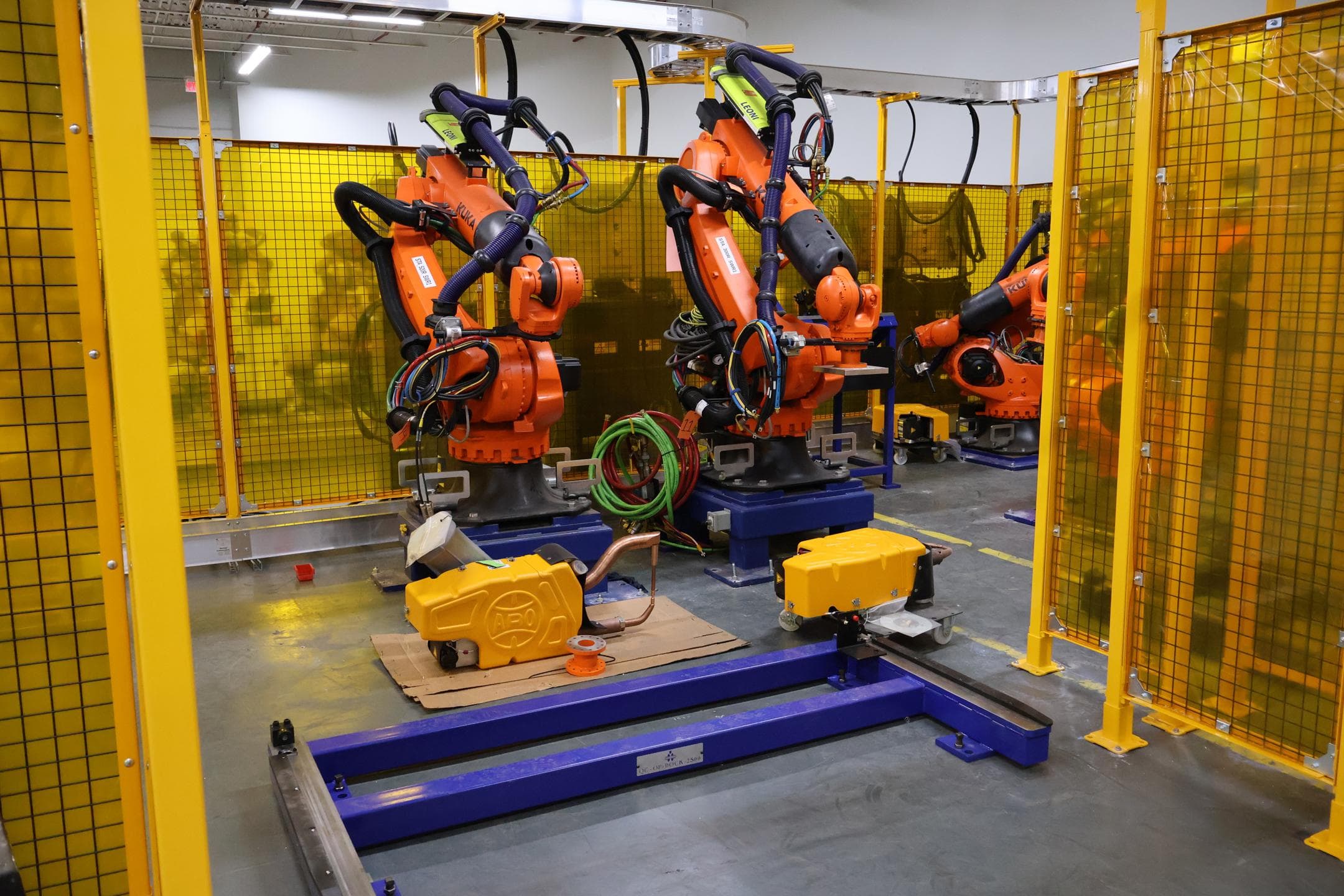
The problem this solves
You have a machine on the floor that mostly still works.
The mechanics are sound. The problem is somewhere else. The program it was built for is ending and the next part is different. The controller is obsolete and spares come from eBay. The rate was right in 2016 and is not right now. The original integrator is gone, or the one person who understood it retired.
Replacing it means capital, lead time, floor disruption, and re-qualification. Living with it means a growing risk you cannot quantify.
Retrofit sits between those, and it is the option most often dismissed because nobody has scoped it properly.
What we actually do
- Assess honestly first.
- We look at the mechanical condition, the controls, and what you actually need it to do, and we tell you whether a retrofit gets you there. Sometimes the answer is that the base machine is not worth the investment. Hearing that before you spend is worth more than a proposal that says yes.
- Controls modernization.
- Replacing obsolete PLCs, drives, and HMIs, moving to a platform your plant supports and can get parts for. Often the highest-return retrofit there is, because the mechanics were never the problem.
- New parts on existing equipment.
- New tooling, fixtures, and programs so the machine runs a part it was not designed for. This is the common one at the end of a vehicle or product program, and it is why building with robots rather than fixed automation pays off years later.
- Adding automation to a manual station.
- Robotic load and unload, part handling, or inspection added to equipment that works but depends on an operator standing there.
- Rate and cycle-time improvement.
- Finding where the time actually goes. It is frequently not where people assume, and it is often a transfer or a wait rather than the process itself.
- Safety and compliance updates.
- Bringing guarding, interlocks, and safety circuits up to current standard on older equipment.
Why our design approach matters here
There is a direct line between how a machine is designed and whether it can be retrofitted later.
One Tier 1 customer specified robots instead of fixed hard automation for a liftgate assembly line, explicitly because they were thinking past the current vehicle program. They wanted equipment that could be redeployed when the model changed rather than scrapped with it.
That decision made the original project significantly more complex and significantly more valuable. It is also the reason that line has a second life available to it.
If you are buying new equipment now, this is the question worth asking in the design phase rather than at the end of the program: what happens to this machine when the part changes?
Starting a conversation
- What the machine is and roughly when it was built. Make, model, controller, integrator if you know it.
- What you need it to do that it does not do now. New part, new rate, new controls, new standard.
- What is driving the timing. Obsolescence, a program change, a safety finding, or a rate commitment. The driver usually determines whether retrofit or replace is the right answer.
Photographs of the control panel and the nameplate save a site visit. Send them if you have them.
PROVEN ON THE PRODUCTION FLOOR
All case studiesNine Years of Almost
Rebuilding a BEV rear axle line out of its own parts
7–9 yearsThe previous line ran without ever meeting quality or cycle timeRead the project Automotive seatingHowever the Operator Saw Fit
Automating an end of line that had never been specified, only performed
10.8 s / 11.2 sAchieved cycle time per part on the two linesRead the projectRELATED CAPABILITIES
Controls & Machine Vision
Connect PLC logic, robot motion, operator interfaces, and inspection into one coordinated process.
Read moreLifecycle Support
Keep your line moving with troubleshooting, maintenance, training, and cycle-time improvement.
Read moreMachine Design & Tooling
Turn a production requirement into practical machine layouts, custom fixtures, and end-of-arm tooling.
Read moreTHE NEXT MOVE IS YOURS.
What could we
build together?
Bring your part, your process, or the problem you haven’t solved yet.
Download the capability sheet One page. No form.